HVAC Plumbing Electrical QuickBooks CleanupA deposit that is not revenue yet
A deposit taken before the work is unearned. The parts counter can be loud. The books can still wait.
Go to the form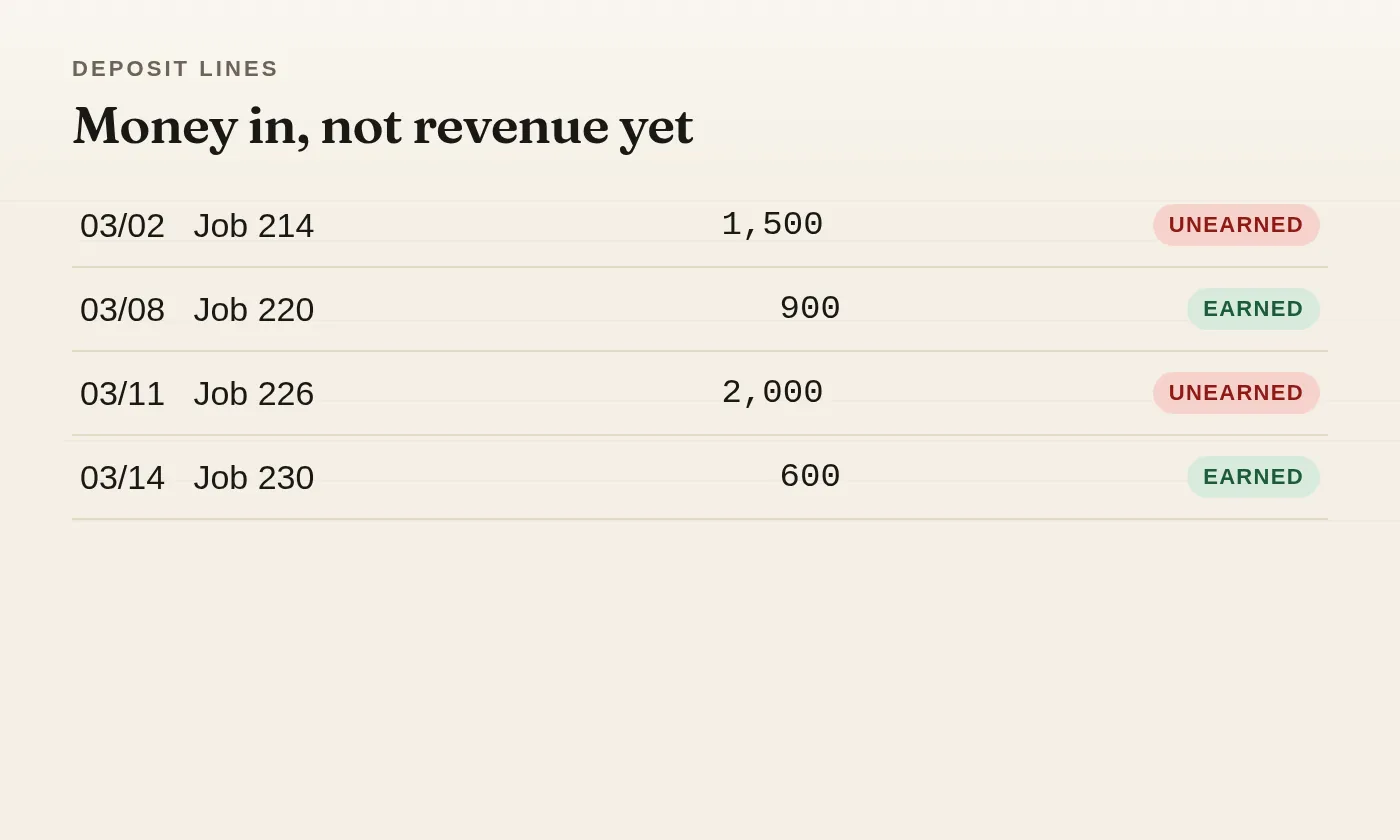
Money that arrived before the work
The first cold weeks of the year fill the parts counter. Owners know that stretch. A deposit collected in that rush is still not revenue. It sits as unearned until an invoice earns it, whether the customer paid it at the counter or from a kitchen table.
Shops take deposits because parts are expensive and no one wants to order a unit for a job that might vanish. That is good sense. The mistake is dropping the deposit into revenue on the day it hits the bank. Revenue on that day overstates the month, and it strands the sales tax conversation, because the tax follows the invoice, not the day the card was swiped. Which visits carry that tax is a state rule, and it is written on the state page.
How we hold the deposit
Unearned is a liability. It says we owe the customer the work, or we owe the customer the money back. When the invoice is written, the deposit moves, and only then does the revenue exist. If the invoice is a separated contract, the tax is stated on that invoice and is not netted into the revenue line. If the job is cancelled, the deposit comes back off the liability, and the revenue accounts never knew it.
Progress bills have to say what the work is. A contract that requires those bills to state labor and materials separately is a separated contract, and it behaves like one even if someone thinks of it as a single price. We read the contract before we pick the account. A loud January is not a reason to skip that read.
A month that can include a rush
The close does not move because January is loud. The same day, the same tie-out of the holding account, the same question about deposits that have no invoice yet. Owners get that close on a video call with the books shared. We do not pretend a busy season is a storefront.
Bring a deposit that is sitting in revenue and the invoice that should have earned it, or the note that no invoice exists yet. We will move the amount and show you the month before and after. The after is usually calmer. That calm is the point.
During a rush the parts counter moves faster than the books, and that is fine. What is not fine is a January revenue number that includes money for work still in February. We pull those amounts back to the liability, leave a sentence that says why, and close January on what was actually earned. The counter can stay loud. The month gets quiet.
January is also when an owner looks at the first voucher of the new year and wonders why last year's deposits made the profit look fat. We would rather show the liability on the January statement than explain a fat profit that was never earned. Bring the deposit list with the open jobs. The two lists together are the month. The month stays honest when the deposit waits.
Name the deposit that posted early
Tell us whether an invoice has earned it yet. That is the fork.

You will be talking to the Steven Palmieri practice.